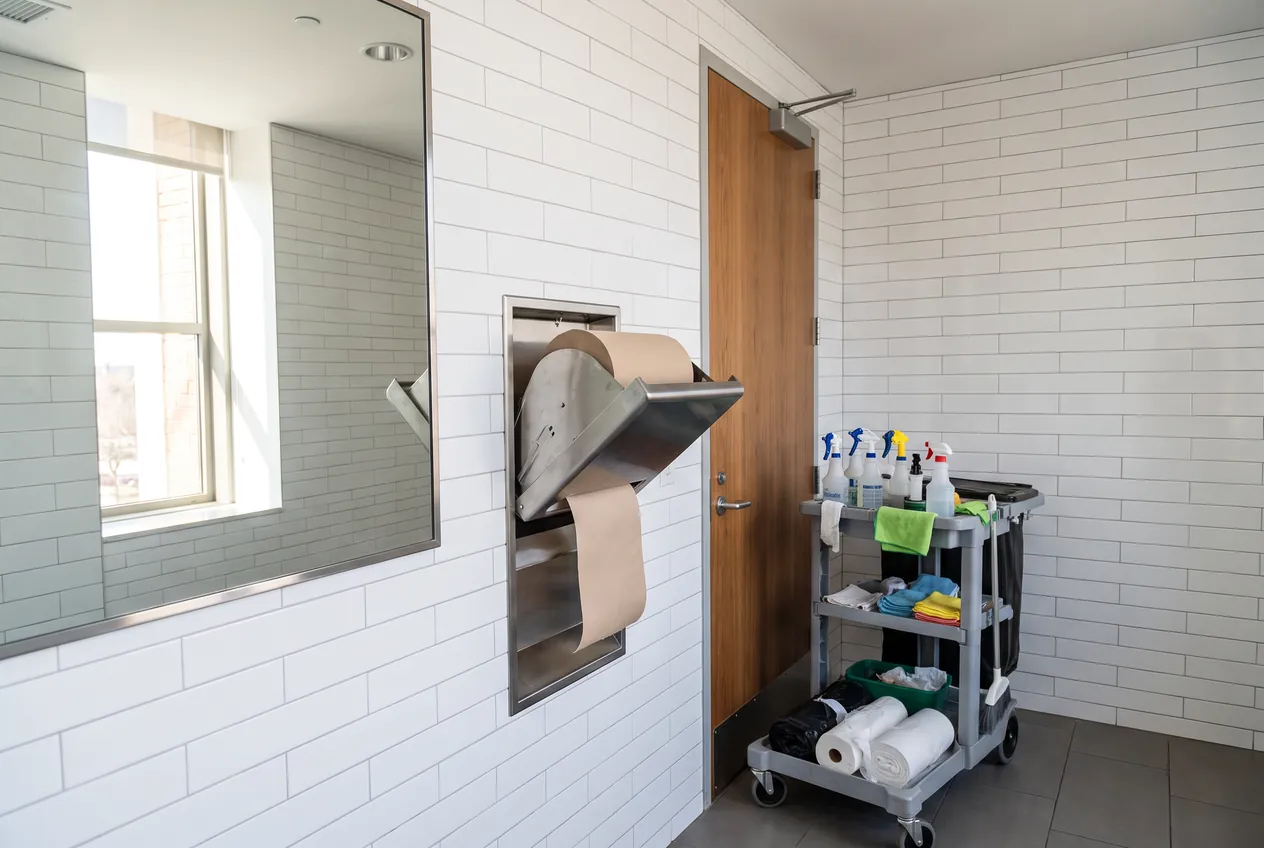
Day porter versus the night crew
Night cleaning is built for an empty building. The crew vacuums every room, mops every hard floor, cleans restrooms top to bottom and hauls out the day's trash in one push. It is efficient because nobody is in the way. The catch is that the results start wearing off the minute the first person walks in.
A day porter fills that gap. A porter, or a small team in a large building, stays on site while the building is busy and keeps it presentable hour by hour. The porter does lighter, quieter work that can happen around people: restocking, spot cleaning, trash runs and quick fixes. Heavy tasks stay on the night schedule, where the noise and wet floors bother no one.
What a day porter usually handles
The exact list depends on the building, but most porter scopes share a common core. Write it down so the porter, the supervisor and the facility manager all work from the same page, and adjust it after the first few weeks once you see where the real pressure points are.
- Restroom checks on a timed round, with paper and soap restocked
- Lobby, entrance and elevator upkeep
- Spill response anywhere in the building
- Trash and recycling pulled before bins overflow
- Conference rooms reset between meetings
- Break room and kitchen counters, sinks and tables
- Door handles, rails, buttons and other touch points wiped
- Glass doors and entry glass kept free of prints
- Entry mats shaken out or vacuumed
- Small issues reported to the building contact
Why porters fit a town that keeps long hours
The valley runs on hospitality and tourism, and a lot of businesses here keep late, extended or 24-hour schedules. In a building that never really empties, there is no clean break for a night crew to reset everything. Restrooms get heavy use in midafternoon and again in the small hours. A porter on each busy shift keeps them stocked and usable instead of letting them slide until the next deep clean.
The local conditions add to it. Fine desert dust blows in every time the doors open, so entry glass, mats and lobby floors need attention more than once a day. Hard water leaves mineral spots on restroom faucets and glass that build up fast if nobody wipes them. A porter handles both on a rhythm, while the night crew does the scrubbing, floor machines and detailed restroom work during the quietest window.
Building a porter round and shift
A good porter shift is built around a round: a fixed loop the porter walks on a schedule, with set stops and a set order. Restrooms and entries come up most often. Break rooms get checked after meal times. Conference rooms are reset as they free up. Between rounds, the porter answers calls for spills and urgent requests.
The table below shows one way to lay out a full-day shift in a busy office or medical building. Times should shift to match your own peak hours, and a building with overnight traffic may run a second porter shift on the same pattern.
| Part of the shift | Main focus | Typical tasks |
|---|---|---|
| Opening | Entries and restrooms | Restock paper and soap, wipe entry glass, check mats |
| Morning rounds | Restrooms and lobby | Timed restroom checks, lobby trash, spot mop |
| Midday | Break rooms and kitchens | Counters, sinks, tables, trash after lunch |
| Afternoon rounds | Meeting rooms and touch points | Reset rooms, wipe handles, rails and elevator buttons |
| Late shift | High-traffic restrooms | Restock, spot clean fixtures, empty bins |
| Handoff | Notes for the night crew | Log open issues and anything that needs deep cleaning |
Full-day or part-day coverage
Not every building needs a porter from open to close. A multi-tenant office tower or a busy medical building may justify full-day coverage, sometimes with overlapping shifts. A smaller office park in Summerlin or Henderson might only need a few hours around the morning rush and lunch. A retail space might want a porter on the busiest days of the week and none on the slow ones.
Start by mapping when the building is busiest and where complaints come from. If restrooms run out of paper by midafternoon or the lobby glass is smudged by noon, those hours are where porter time pays off. Ask the cleaning company to quote more than one shift length so you can compare coverage against cost before committing.
Keeping porter work accountable
Daytime cleaning happens in front of tenants, patients and customers, which makes gaps easy to spot and easy to complain about. Simple tools keep the work honest: a written round schedule posted where the porter and the supervisor can see it, and a log the porter fills in at each stop. Restroom check sheets on the back of the door are the most common version.
Review the log with the provider every few weeks. Look for rounds that keep getting skipped, areas that need more frequent visits and requests that pile up at the same hour. Adjust the round instead of adding hours by default. A short monthly walk with the supervisor catches the issues a log will not show.